Need sewer line repair in Richmond?
Send a request through the form or email contact@apparentlyautomatic.garden. Describe what is happening and add any photos. Your request goes to a provider in our network.
No obligationRequest an estimate from local providers
A lot of people think a sewer problem is just a stubborn clog. In practice, a main line can be blocked by roots, crushed by shifting soil, or worn out from age. Homes across the Richmond area often have older cast-iron, clay or galvanized pipe, and four-season weather puts stress on all of it.
Apparentlyautomatic Plumbing is a referral service. We do not do the work. We help you get organized, learn what to ask, and request an estimate from independent providers in our network. Providers set their own prices and availability, so you compare written quotes before you commit to anything. Document first, then ask.
A lot of people think a gurgling toilet or a wet basement floor drain will settle down by morning. In practice, a backup usually points to a blocked or damaged main line. Treat it as urgent, and move with care.
Myth: photos can wait until the cleanup is done. Reality: the mess is your clearest record. Take wide shots and close-ups before anything is moved. Note the date, the time and which drains are affected. Write down what you flushed or ran last.
A provider can use those notes to narrow down the cause. Some policies may cover sudden damage, so check your policy. Providers can often help document damage for a claim.
Not every sign is dramatic. Watch for these:
A plunger helps one toilet. If every drain is slow, the trouble sits farther down the line. Repeat clogs in the same spot often mean roots, a sag or a crack, not just grease.
Providers who offer emergency drain clearing can open a blocked pipe so water moves again. Blocked pipe services are a good first step, but a camera view shows why the clog formed and whether sewer line repair is needed.
Older homes bring older pipe. Cast iron rusts and flakes from the inside. Clay joints let thin roots creep in. Galvanized lines narrow with scale. Freeze-thaw winters shift the soil, and heavy nor'easter rain can load the ground and stress weak joints. Humid summers feed fast root growth. Wipes sold as flushable also snag on rough pipe walls.
Newer lines can fail too. Poor slope, a bad joint or a section crushed by heavy equipment can show up within a few years. Age is a clue, not a rule.
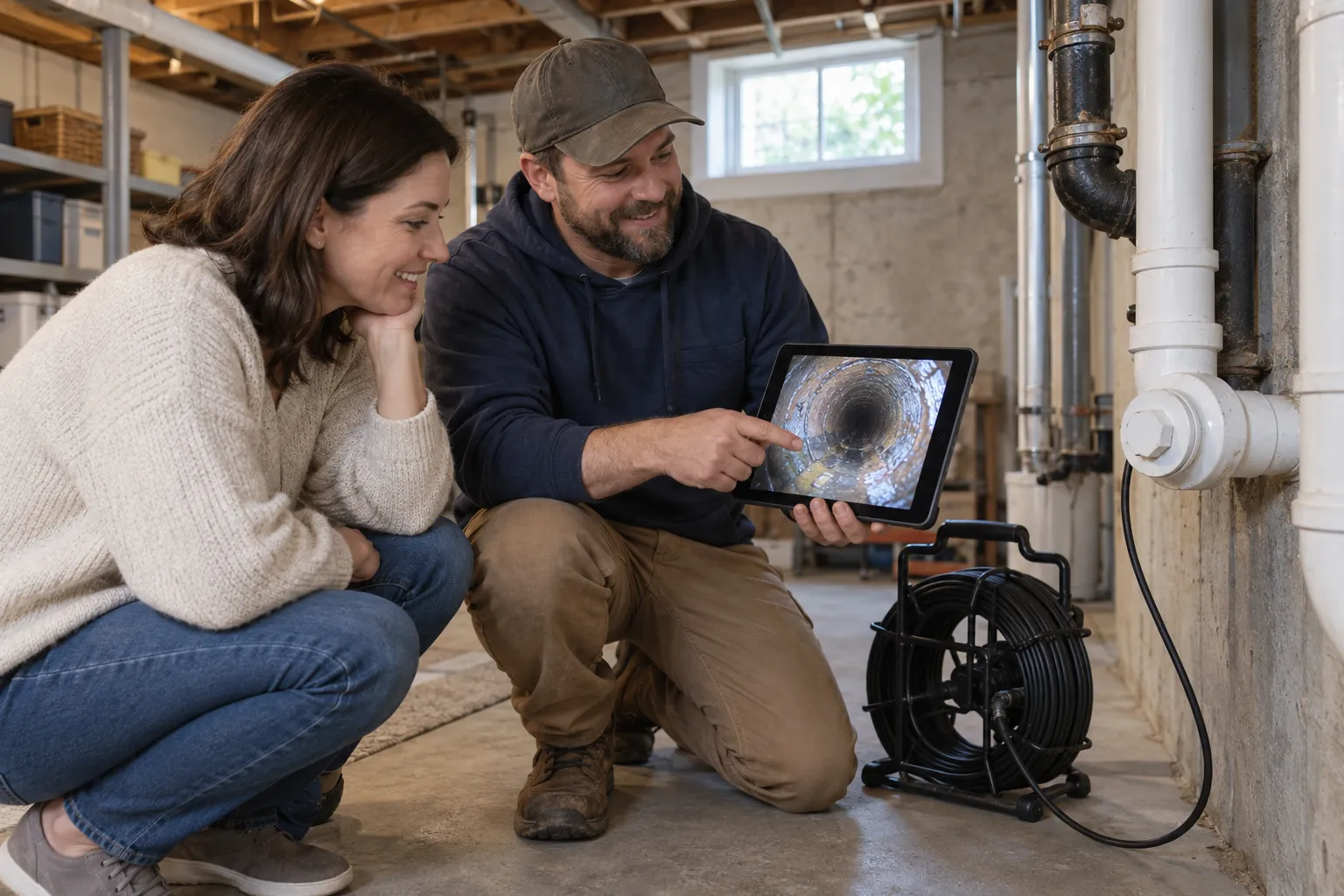
Many providers use a small camera on a flexible cable. It shows roots, cracks, offsets, sags and buildup on a screen. Ask for a copy of the video or screenshots. Some providers also use a locator to mark the line's path and depth above ground.
A recorded inspection gives you something solid to compare across estimates.
Myth: every repair means a torn-up yard. Reality: there are several paths, and the right one depends on what the camera shows.
A damaged section is cut out and replaced. It suits a short, local break and keeps digging small.
A new pipe is formed or pulled through the old route with limited digging. Not every line qualifies. A badly collapsed section may rule it out.
When a line is crushed or sagging, a trench may be the sound choice. Ask how the yard, driveway and landscaping will be handled afterward.
Many towns require a permit for sewer work, and some also require an inspection. The provider usually handles the paperwork, but ask who is doing it. Also learn which part of the pipe is yours. In many places the homeowner owns the line from the house to the connection at the main, though rules differ. Check with your local utility or municipality. If you live in a rowhouse, mention it, since lines are sometimes shared.
Share your photos, notes and any camera footage with each provider. Estimate before commitment: compare the scope of work, not only the price. Providers in our network set their own prices and availability.
A provider views the inside of your line and shows you the cause on screen.
Scope, materials, permits and cleanup spelled out so you can compare providers clearly.
Spot repair, lining or replacement explained, with the reasons behind each recommendation.
Ask how digging, debris and restoration of your yard will be handled.
Prices vary a lot by pipe depth, length, soil, access and local permit rules. These are typical U.S. ranges only. Always get a written quote that matches your own photos and camera findings.
| Service | Typical range | Notes |
|---|---|---|
| Camera inspection | $100 – $500 | Often adds a locator or recording |
| Main line clearing | $150 – $600 | Opens the pipe but may not fix damage |
| Spot repair | $1,000 – $4,000 | Short damaged section, deeper pipe costs more |
| Trenchless lining or bursting | $3,000 – $12,000 | Depends on length and pipe condition |
| Full excavation replacement | $3,000 – $15,000+ | Landscaping and driveway work can add cost |
| Cleanout installation | $500 – $2,500 | Gives future access to the main line |
Stop using water, stay safe, then take photos and videos of the backup and affected areas.
Note dates, affected drains, pipe age and any past plumbing work.
Send your details through the form and we refer you to providers.
Review written quotes, ask your questions, then choose the provider you trust.
Photos, dates and notes help providers understand your situation and give clearer estimates.
Learn what a clog, a root or a crack really means before you decide.
Know what to ask, what a good answer sounds like, and which red flags to watch.
Get connected with independent providers in our network who work in your area.
Send a request through the form or email contact@apparentlyautomatic.garden. Describe what is happening and add any photos. Your request goes to a provider in our network.
No obligationIf one drain is slow, a local clog is likely. If several drains back up, toilets bubble, or you smell sewage in the yard, the main line may be damaged. A camera inspection can confirm the cause.
It depends on your policy. Some policies may cover sudden damage, while wear, age and root growth are often excluded. Check your policy and ask your insurer. Providers can often help document damage for a claim, so keep photos and notes.
It varies by method and access. A spot repair may be quick, while a full replacement takes longer. Permits and inspections can add time. Ask each provider for a written scope and a realistic schedule.
Send a request through the form or email contact@apparentlyautomatic.garden. Describe what is happening and add any photos. Your request goes to a provider in our network.
No obligation